Sauces · Maison II
Beurre Blanc: Why It Breaks and What to Do
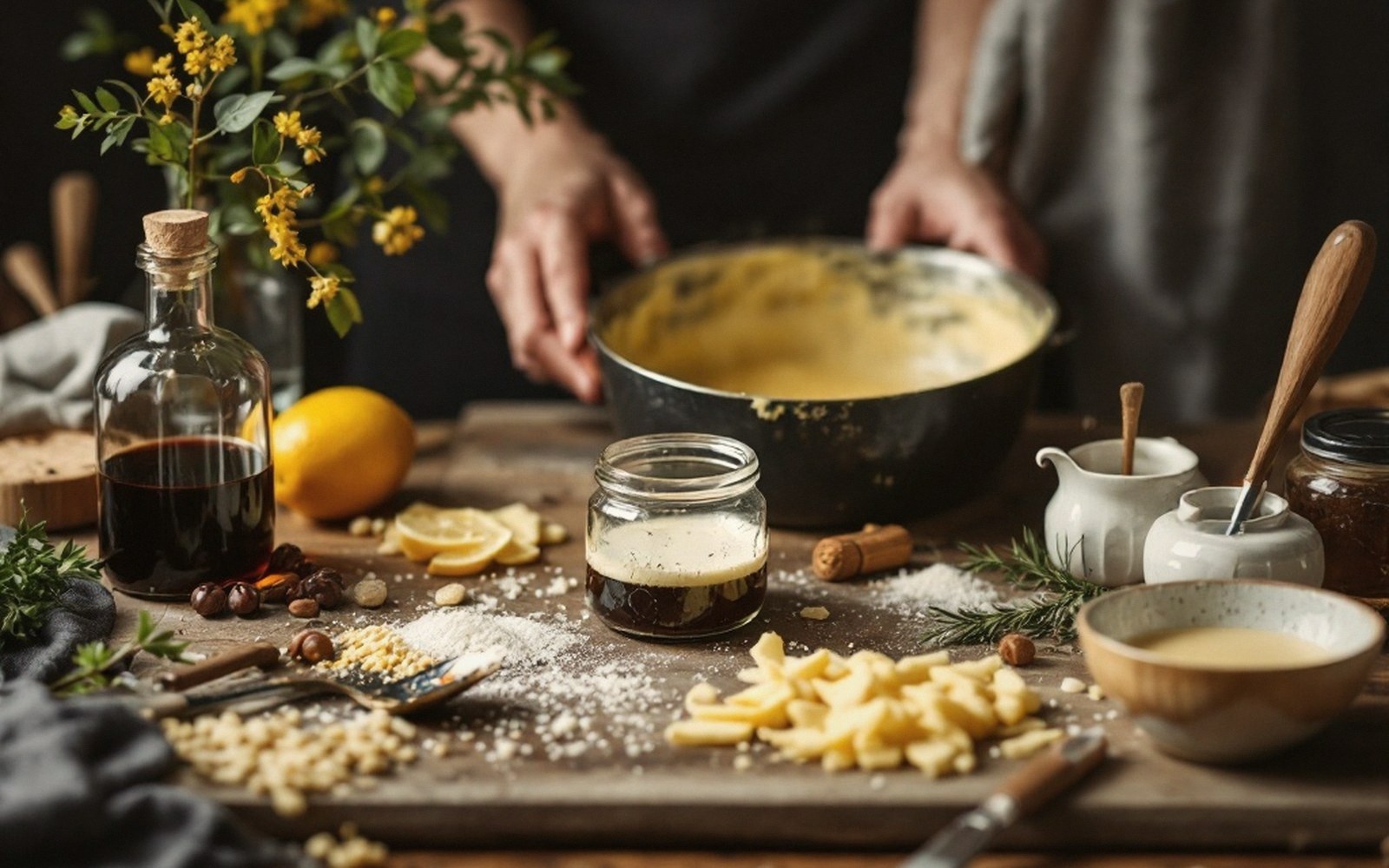
The most instructive thing about beurre blanc is how easily it fails — and how precisely it tells you why.
The Reduction Is Not Optional
Beurre blanc begins as a sharp reduction of white wine and white wine vinegar with shallots, sometimes with a splash of water added. This is not a flavouring step that you could skip or abbreviate. The reduction performs structural work: the acidity and the residual liquid it produces create the continuous aqueous phase that the emulsion needs. Without a sufficiently concentrated reduction, you are trying to suspend fat in nothing, and the butter will simply melt into a greasy puddle rather than form a sauce.
The proportion matters. The reduction should be taken quite far — most of the liquid driven off, shallots soft, the mixture almost syrupy but not dry. If it goes completely dry, the pan is too hot for what comes next, and there is nothing left to hold the first pieces of butter in suspension. A few tablespoons of the concentrated, acidic liquid is exactly what you want.
Without a sufficiently concentrated reduction, you are trying to suspend fat in nothing.
What Actually Holds It Together
Beurre blanc is a warm emulsion, which makes it inherently unstable. Unlike a cold emulsion such as mayonnaise, heat is its enemy in both directions: too cold and the butter fat solidifies and separates; too hot and the butter fat melts out and the sauce breaks into a pool of liquid with floating grease. The working temperature is a narrow band — roughly warm to the hand but well below a simmer.
The emulsifying agents here are modest: the proteins and phospholipids in butter's own milk solids, assisted by the acidity of the reduction. This is why the quality of the butter matters in a way it doesn't in, say, a flour-thickened sauce. A high-fat butter with good milk-solid content gives the sauce more to work with. The butter should be cold, cut into cubes, and added incrementally — not to be fussy but because each piece must cool the pan slightly while simultaneously dispersing into the liquid phase. You are using cold butter to control temperature from inside the pan.
The motion matters too. Whisking or swirling keeps the fat globules agitated and prevents them coalescing. Stop moving the pan and you give gravity time to do what physics wants: separate heavier from lighter.
| The reduction base | Concentrated acid and shallot; provides the aqueous phase and the emulsifying acid |
| Butter temperature | Cold, in increments — each cube controls the pan temperature from within |
| Motion | Whisking or swirling keeps the fat globules suspended; stopping lets gravity separate them |
When It Breaks
A broken beurre blanc is not a failure of nerve. It is information. If the sauce goes greasy and liquid separates out, the pan was almost certainly too hot — the fat has melted free of its suspension. If it goes grainy and curdled-looking, the temperature dropped too far and the milk solids have clumped. Both are recoverable, up to a point.
For an overheated break: remove from heat immediately, add a spoonful of cold water or an ice cube, and whisk vigorously while the pan cools. If the fat has fully separated and is visibly pooling, it is more difficult, but starting a fresh reduction in a clean pan and whisking the broken sauce into it — treating it as you would broken mayonnaise — can rescue most of it.
For a cold break: gentle heat and a fresh cube of cold butter worked in carefully can bring it back. The goal is to re-establish the working temperature range.
The real lesson beurre blanc teaches is that emulsification is a dynamic state, not a finished product. The sauce is stable only as long as conditions hold. Finish it as close to service as the situation allows, hold it in a warm bain-marie if necessary, and never let it sit over direct heat unattended. This is not fussy cooking. It is cooking with an understanding of what the sauce actually is.
Continue in the house