Sauces · Maison II
Monter au Beurre
Cold Butter, Moving Pan, the Narrow Window Where a Sauce Becomes Silk
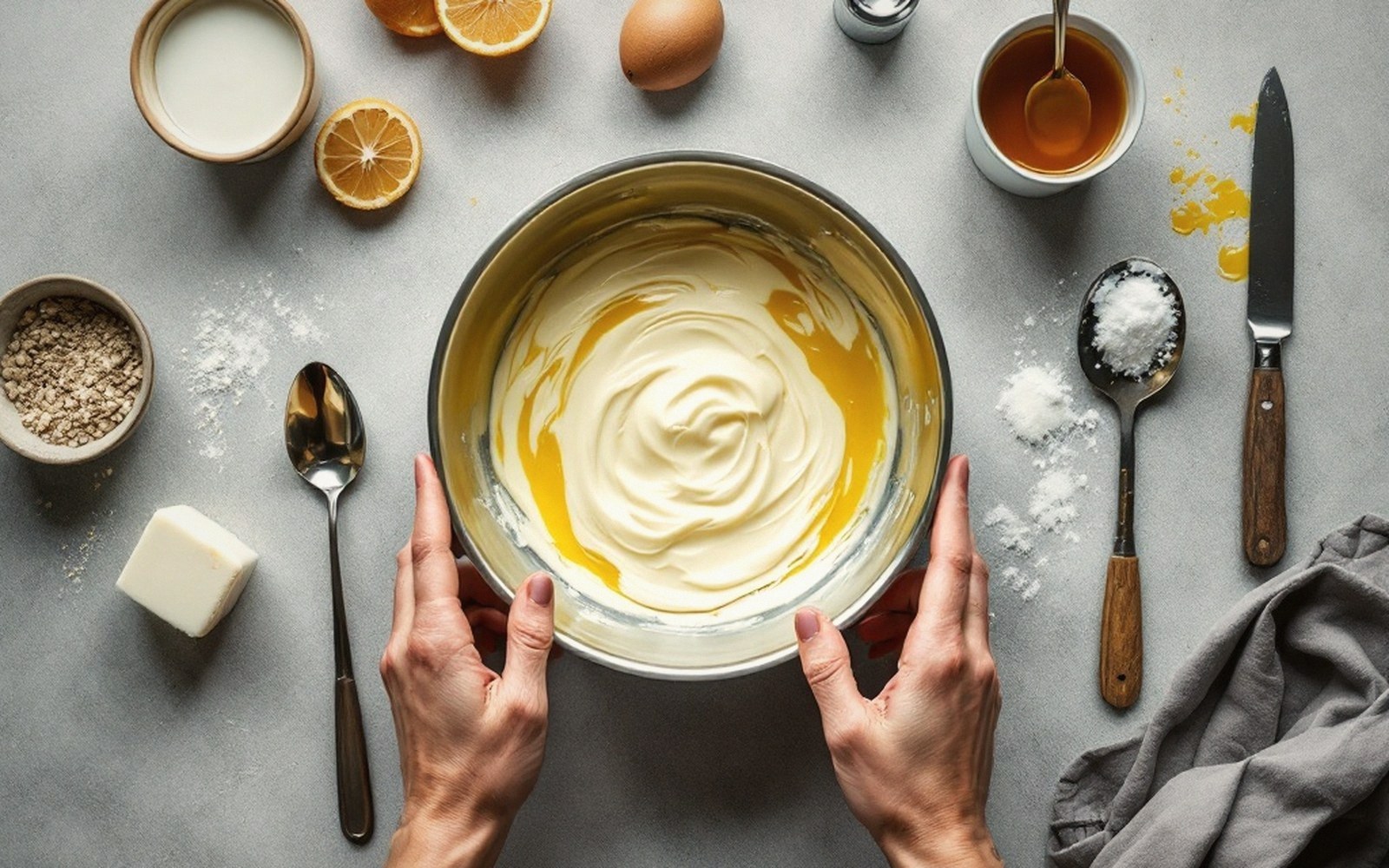
The two seconds before a sauce breaks are identical to the two seconds before it succeeds — which is why understanding the physics matters more than any recipe.
What You Are Actually Doing
The French phrase is modest for what it describes: monter au beurre — to mount with butter. A sauce or braising liquid is in the pan, reduced to the intensity you want, and you pull the pan from direct heat and work in cold butter, cut into cubes, one or two at a time. In thirty seconds, something that was a thin, slightly aggressive liquid becomes glossy, cohesive, voluptuous. The colour lifts; the sharp edges of acid or reduction round out; the sauce coats a spoon and holds there. Then, if you push your luck — leave it on the heat too long, add butter too fast, let it sit — it breaks. The fat separates, a greasy film rises, and there is no rescuing it without starting again.
Understanding why that works, and why it fails, requires thinking about what butter actually is and what you are asking it to do.
Butter is an emulsion to begin with: roughly eighty percent fat, with water and milk proteins distributed through it. When you add cold butter to a hot liquid, you are asking that existing emulsion to extend into the liquid — to disperse its fat in tiny droplets suspended in the sauce. The result is what chemists call an oil-in-water emulsion: fat particles surrounded by water, held in suspension by the lecithin and other phospholipids naturally present in butterfat, with the proteins acting as additional stabilisers at the droplet surfaces.
That suspension is what creates the texture. A well-mounted sauce is not a fat-enriched liquid the way cream-enriched sauces are; it is physically different, a new structure with a characteristic viscosity and sheen that comes not from dissolved solids but from the mechanical relationship between dispersed droplets and surrounding liquid.
| The window | Roughly 60–80°C — below simmering, well above room temperature |
| Cold butter | Cools the sauce as it enters; not incidental, part of the technique |
| The motion | Swirl, don’t stir — folding keeps the droplets distributed and no spot overheats |
| Mount and serve | The emulsion is dynamic, not stable; it does not hold |
The Temperature Window and Why It Is Narrow
The physics of butter emulsification depends on temperature in two directions at once. Too cold, and the butter fat is semi-solid; it resists dispersing into droplets, and you end up trying to melt lumps of fat into a liquid, which produces something oily and uneven. Too hot, and the emulsion cannot hold: the fat droplets coalesce, the proteins denature, and the sauce breaks.
The window sits between roughly sixty and eighty degrees Celsius — below simmering, well above room temperature. This is why you pull the pan from heat before you mount the butter: direct heat makes the sauce too hot, and even residual heat continues to work once you begin. The cold butter itself is doing two things simultaneously. It is, obviously, providing fat and water. But it is also actively cooling the sauce as it goes in, which is why the temperature of the butter matters. Soft or room-temperature butter cannot do this; it enters the sauce already warm and contributes no moderating effect on the liquid. Cold butter, by contrast, chills the sauce locally as each cube melts in, keeping the system in the window.
The motion of the pan is the third element. Swirling or shaking — rather than stirring with a spoon, which tends to cut through the emulsion rather than fold it — keeps the sauce moving continuously, distributing the dispersing fat droplets evenly and preventing any one spot from overheating. Good cooks do this without thinking about it; it looks like a habit, but it is a continuous act of temperature management.
The common error is to keep the pan on the burner. Some cooks compromise, moving the pan on and off very low heat in a rapid alternation, which can work but requires good feel. The safer route for learning the technique is to work entirely off heat, trusting that the sauce retains enough warmth to melt the butter. If the sauce looks like it is cooling too fast, a brief return to heat is possible — but the moment of vulnerability is real, and experienced cooks usually avoid the compromise.
What Breaking Looks Like, and What It Tells You
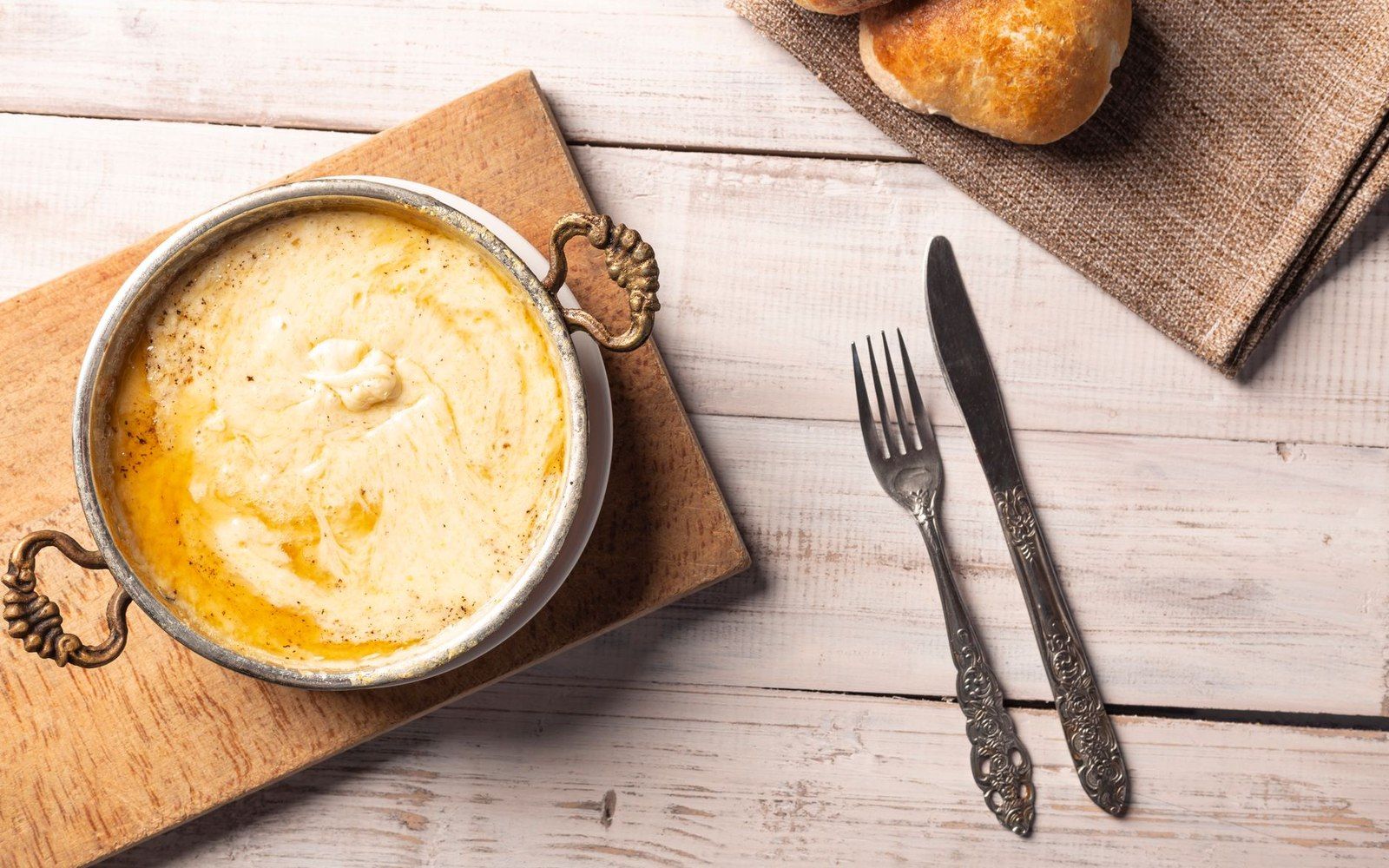
A broken monter au beurre is unmistakable. The sauce clarifies; the milky opacity of the emulsion disappears and the liquid becomes translucent. A ring of butterfat pools at the edges. The texture collapses — what was viscous and coating becomes thin and greasy. If you tilt the pan, the fat moves separately from the liquid beneath.
Breaking almost always happens for one of three reasons. The sauce was too hot to begin with, meaning the emulsion never properly formed and you were watching it fail in slow motion from the first cube. The butter was added too fast, meaning the existing emulsion could not accommodate the incoming fat quickly enough and the droplets coalesced before the stabilisers could coat them. Or the sauce sat too long after mounting — even off the heat, a mounted sauce is not stable indefinitely, and serving it promptly is not a nicety but a structural necessity.
The third cause is the one most often overlooked in professional kitchens when service is busy. A sauce mounted to perfection at the start of a rush is a broken disappointment ten minutes later. The emulsion is dynamic, not static; the fat droplets are always under pressure to coalesce, held apart only by the protective protein layer and by motion that is now absent. Serving immediately is the only reliable solution.
Can a broken sauce be recovered? Sometimes. If you catch it early — the sauce is just beginning to look greasy rather than fully separated — you can try adding a small quantity of cold water and re-emulsifying with vigorous swirling. The water replenishes the aqueous phase and can often re-establish the suspension on a sauce that has barely broken. A sauce that has fully separated, with clarified fat pooling visibly, is generally beyond recovery.
| Too hot from the start | The emulsion never properly forms; the sauce clarifies as it separates |
| Butter added too fast | The emulsifiers cannot coat the incoming droplets; fat pools at the edges |
| Held too long | Even off the heat, the droplets coalesce once motion stops |
| The recovery | Cold water and vigorous swirling, if caught very early; fully separated is generally a loss |
Why the Result Is Different from Cream
It is worth being precise about what mounting with butter achieves, because the texture it creates is specific and cannot be replicated by other enrichments. Cream, added to a sauce and reduced, thickens through the concentration of its own solids — proteins, sugars, stabilisers — and produces a different kind of richness: heavier, more neutral, more persistent on the palate. A cream-enriched sauce coats with weight.
A butter-mounted sauce coats with silk. The mouthfeel is lighter and shorter — it dissipates more quickly on the tongue, leaving the flavour of the base sauce more exposed rather than wrapped in dairy. This is why the technique is used as a finish rather than a building block: you want the reduction you built — the wine, the stock, the herbs, the aromatics — to remain the flavour, with the butter providing a delivery mechanism that elevates rather than obscures.
The pan comes off the heat. The butter goes in cold. The pan moves.
The acidity of the sauce matters here too. An acidic environment — a wine-based reduction, a sauce with a squeeze of lemon — stabilises the emulsion by denaturing a portion of the proteins in a way that makes them more effective emulsifiers. This is why so many classical butter-mounted sauces involve white wine or verjuice in their base: the acid is not only flavour, it is structural. A sauce built on pure stock with no acidic component is harder to mount successfully and breaks more readily.
The beurre blanc, which takes this principle to its logical extreme — butter mounted into a pure wine-and-shallot reduction with no other body — is the sharpest illustration of both the technique's possibilities and its instability. Monter au beurre into an already-substantial sauce is considerably more forgiving, because the existing body of the reduction gives the emulsion more structure to work within.
This is, ultimately, a technique about physics more than skill. Once you understand the temperature window, the role of cold butter, the purpose of motion, and the structural logic of an emulsion under heat, the method becomes legible. The pan comes off the heat. The butter goes in cold. The pan moves. The sauce becomes something it was not before. You serve it immediately, or you lose it.
Continue in the house