The Methods · Maison I
What Sauté Actually Means
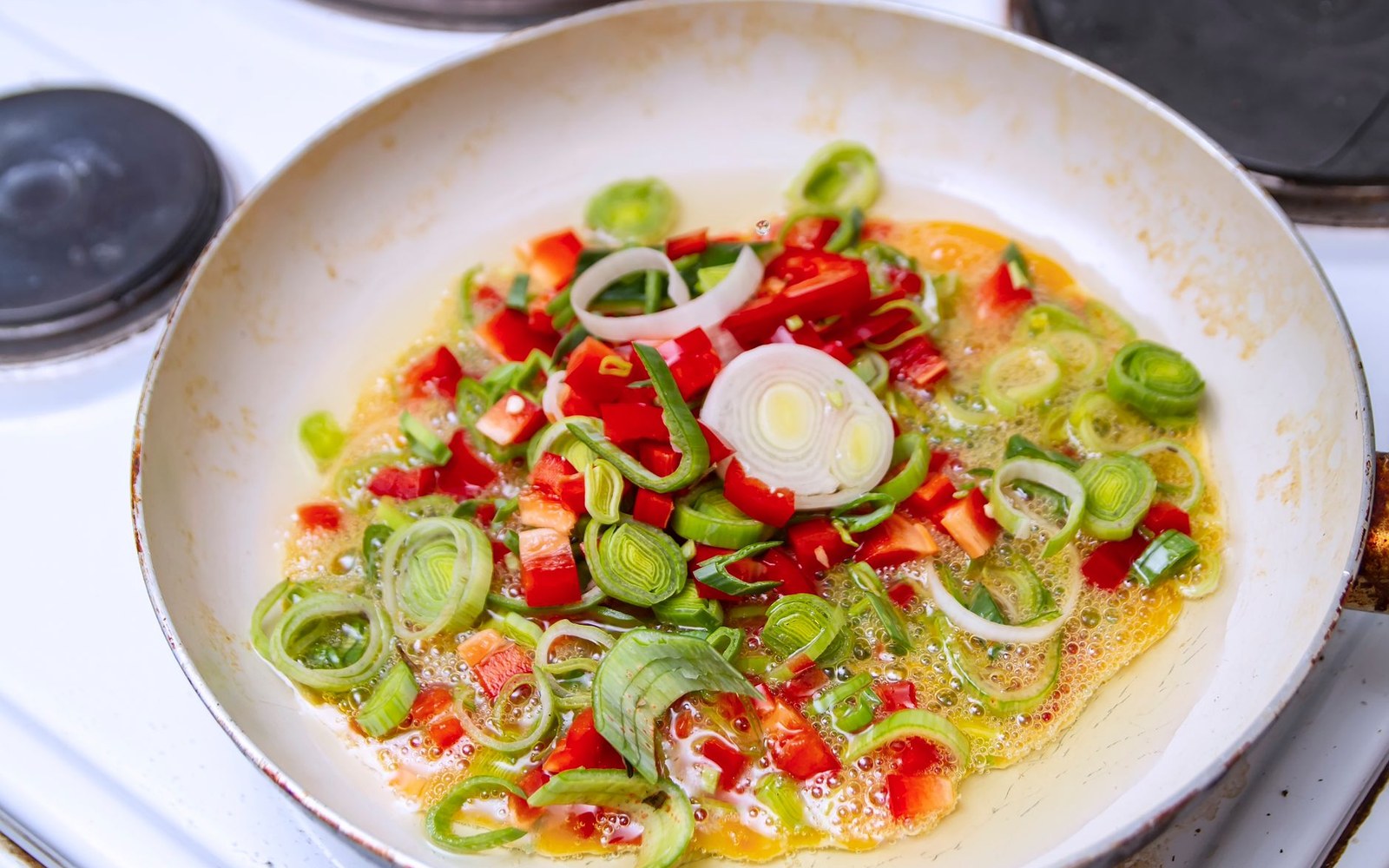
Most home cooks have never actually sautéed anything. They've braised it in a wide pan and called it by the wrong name.
The Mechanics of the Word
Sauter means to jump. The word is not metaphorical — it describes what happens in the pan. Food moves under high, dry heat, each piece making brief, repeated contact with a hot surface before breaking contact again. That movement matters as much as the temperature.
The goal is Maillard browning: the dry-heat reaction between amino acids and reducing sugars that produces the hundreds of flavour compounds responsible for the crust on a chicken thigh, the colour on a sliced mushroom, the edge on a piece of liver. Maillard browning requires surface temperatures well above the boiling point of water. What prevents it is moisture — specifically, the steam rising from food and pooling in a wet pan. When a pan is crowded, the food releases moisture faster than it can evaporate. Temperature drops. The food no longer fries; it poaches in its own liquid. The crust never forms. By the time the liquid cooks off, the interior is overdone and the exterior is pale and slightly rubbery.
This is what most home cooks are actually doing.
| Method | What it actually is |
|---|---|
| Sauté | High, dry heat; food in motion; Maillard browning is the goal |
| Pan-fry | More fat, less movement, lower heat |
| Braise | Covered liquid and time — the accidental result when a sauté goes wrong |
| Sweat | Low heat, covered, no browning intended; the deliberate opposite of sauté |
What Goes Wrong and Why
Three failures, each with a mechanical cause.
Cold pan. A sauté pan must be hot before fat enters it, and the fat must be hot before food enters it. This is not a ritual — it is physics. A cold pan means the food's surface cools the metal before browning begins, and steam has time to accumulate. By the time the pan recovers its temperature, the window for crust formation has already closed.
Too much food. Every piece of food in the pan is also a source of steam. Double the food and you roughly double the moisture load. Restaurant ranges run at heats that overcome this; domestic burners do not. The practical consequence is that a home cook should sauté in batches that look embarrassingly small. Half the pan occupied, generous space between pieces — this is correct form, not waste.
Lid on the pan. A lid turns a sauté into a braise in under two minutes. The steam has nowhere to go. Pressure and humidity build. Food that was browning begins to steam-cook. Once that happens, the process cannot be reversed — the crust, if it existed at all, will soften before the lid comes off.
| Cold pan | Food cools the surface before browning begins; steam accumulates |
| Too much food | The moisture load exceeds what the burner can evaporate; the pan steams |
| Lid on | Traps steam instantly; converts a sauté to a braise in under two minutes |
The fat used also matters. Butter alone, at sauté temperatures, will burn before the food browns adequately; this is why clarified butter, or a mix of whole butter and neutral oil, is standard French practice. The oil raises the smoke point; the butter contributes flavour and helps colour develop evenly.
What Sauté Is Not
Sauté is not the same as pan-frying, which is lower heat with more fat and no movement. It is emphatically not braising, which is covered liquid and time. And it is not the same as sweating — the deliberate low-heat softening of aromatics in covered fat, which is the opposite of sauté in almost every respect. The French kitchen is precise about these distinctions because each method produces a different physical result, and calling them all "cook in a pan" destroys the logic of a sequence.
If nothing is sizzling, it isn’t a sauté.
When a recipe tells you to sauté onions until soft and golden, it is asking for two consecutive operations: first a genuine sauté to drive off surface moisture and initiate browning, then a reduction of heat to continue softening without burning. Most cooks do only the second half, which is why their onions are soft and pale rather than soft and coloured.
The pan is telling you everything. If nothing is sizzling, it isn't a sauté.
Continue in the house