Stocks & Fonds · Maison III
What the Roasting Actually Adds
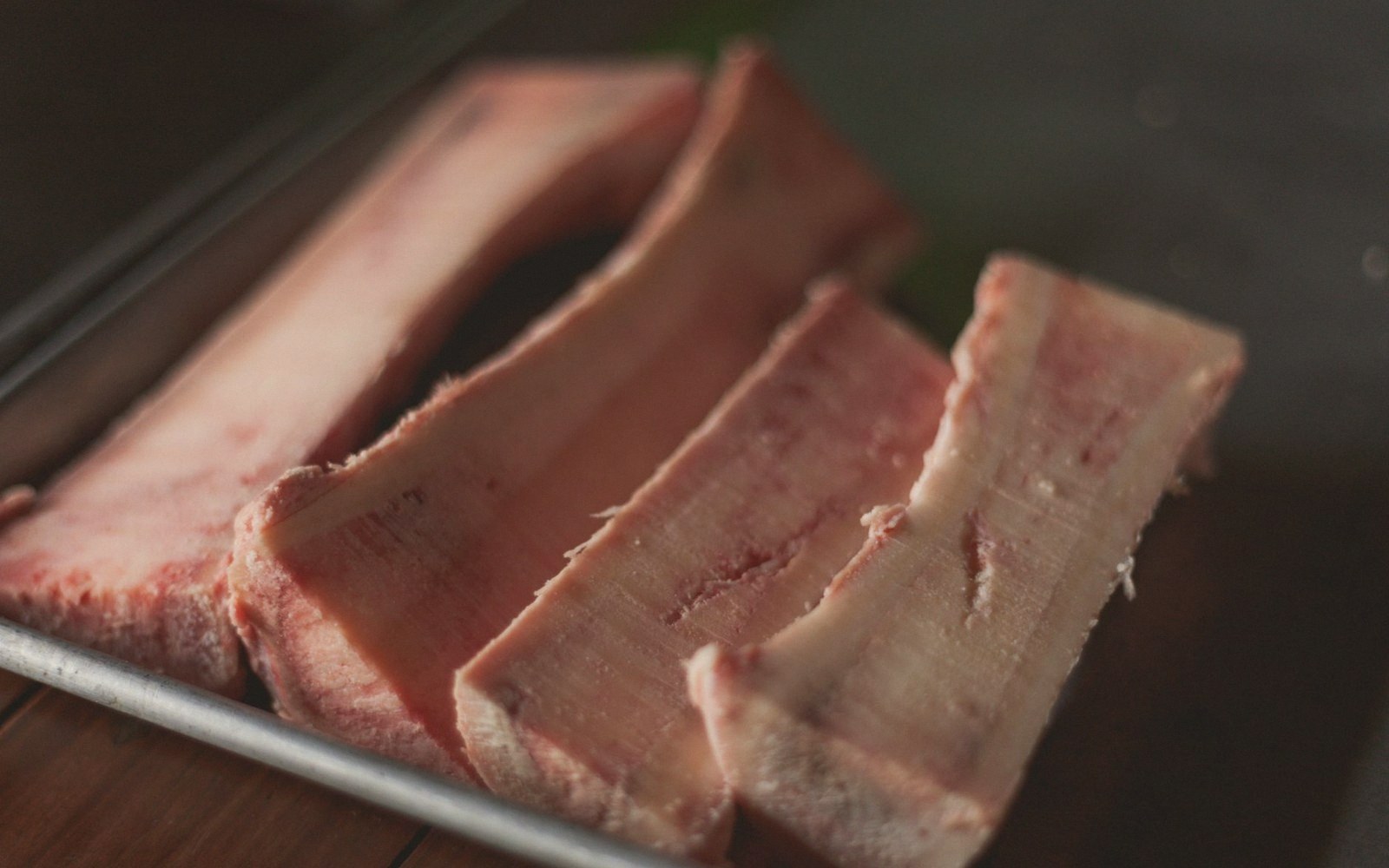
The colour in a brown stock is not decoration. It is a different class of flavour compound entirely.
The Reaction That Changes Everything
When bones and mirepoix go into a hot oven before the water, the goal is not browning for its own sake — it is the Maillard reaction, the cascade of chemical events that occurs when amino acids and reducing sugars meet dry heat above roughly 140°C. The result is hundreds of new aromatic compounds that simply cannot form in water, because water caps the surface temperature at 100°C and the reaction stalls. A white stock never crosses that threshold, so it never builds those compounds at all.
Roasted bones yield something beyond extracted collagen and minerals: melanoidins, pyrazines, furans — deep, bitter-edged, savoury molecules that read on the palate as complexity rather than richness. The tomato paste added partway through the oven stage contributes its own round of Maillard products and adds glutamates that amplify everything further. Caramelisation of the natural sugars in the onion and carrot runs alongside, adding a faintly sweet counterweight to the roasted bitterness.
None of this survives if the bones steam rather than roast. Overcrowding the pan, or starting with wet bones, drops the surface temperature enough to halt the reaction and produce stewing — grey rather than mahogany, with none of the aromatic payoff. The roasting tray must be wide, the oven genuinely hot, and the bones dry.
The finished fond brun is not merely a darker version of fond blanc. It carries a fundamentally different flavour architecture — one assembled entirely in the oven, before a drop of water is added.
Continue in the house