The Methods · Maison I
The Logic of Braising
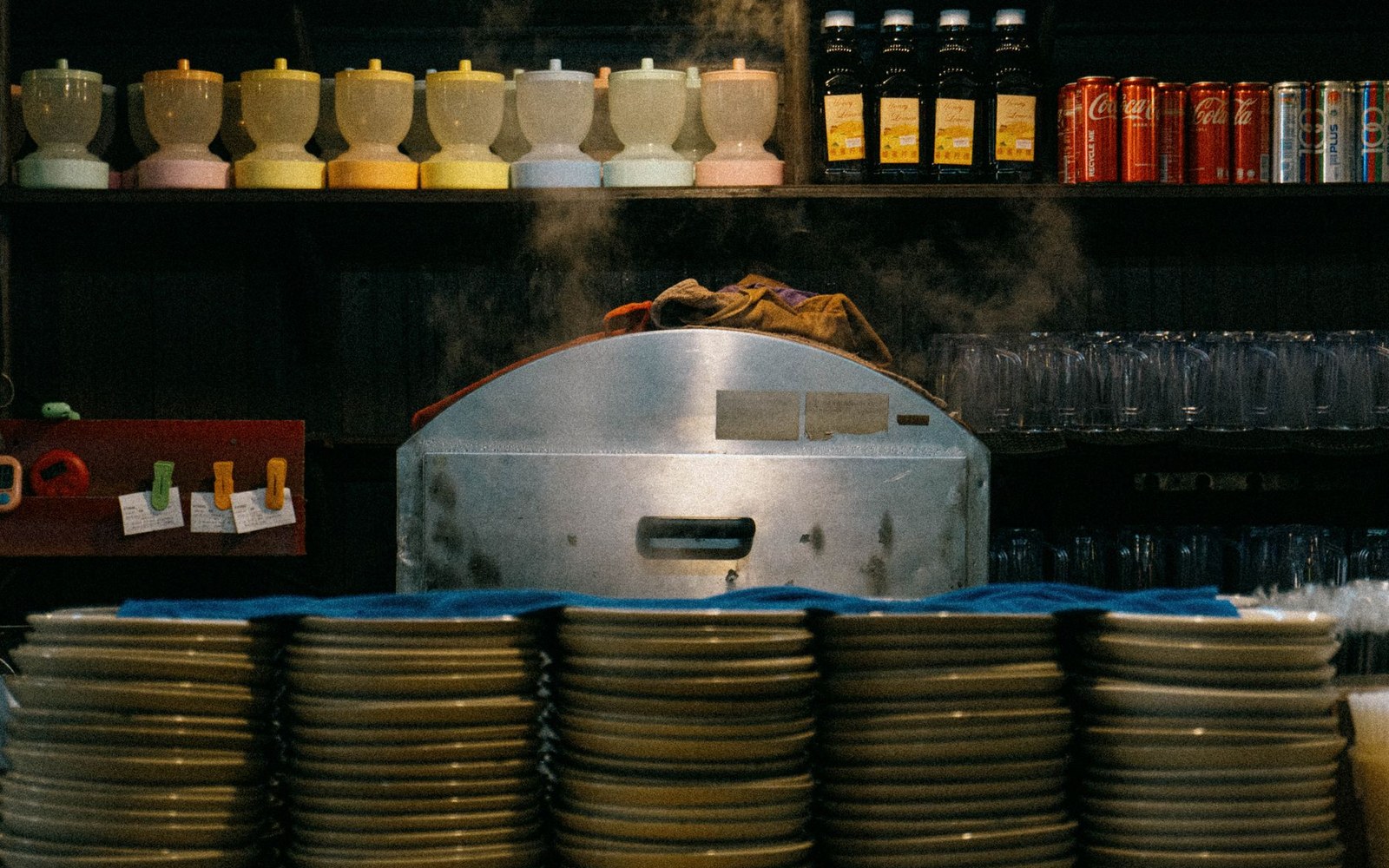
A braise is not slow cooking with added liquid. It is a closed environment engineered to do three distinct things at once — and understanding that changes every decision you make.
What the Closed Lid Is Actually Doing
A braise begins with a paradox. You are applying high heat to coax colour from meat and aromatics, then immediately switching to the lowest possible sustained heat and sealing the pot. The two phases feel contradictory. They are not. The first creates flavour compounds through the Maillard reaction — the dry, high-heat browning of proteins and sugars on the surface of meat and the cut faces of mirepoix. The second preserves them, concentrates them, and adds an entirely different class of transformation that only low, moist heat can produce.
The closed lid is doing something specific. Inside a sealed pot at a low oven temperature, you create a saturated steam environment. The liquid in the pot — wine, stock, cooking juices — partially evaporates, fills the airspace above the food with moisture-laden vapour, and condenses on the lid before dripping back down. This cycling means the upper surfaces of the meat, which sit above the liquid, are not left to dry out. They are continuously basted by condensation. The shape of the lid matters here: a domed lid on a braising pot encourages condensate to run back to the centre; a flat lid pools it unevenly. This is not aesthetic. It is functional, which is why the heavy oval cocottes designed for braising are shaped the way they are.
The sealed environment also traps aromatic volatiles that would otherwise cook off into the kitchen. Compounds driven out of garlic, thyme, bay, and cooked wine stay in the pot, dissolving into the braising liquid and eventually into the meat itself. Open the lid too often and you are slowly emptying the room of what you built.
| Maillard reaction | Dry, high-heat browning of surface proteins and sugars; builds flavour before the lid goes on |
| Collagen | The structural protein of worked muscle — cheek, shin, shoulder, oxtail, short rib |
| Gelatin | What collagen becomes when sustained low heat unwinds it; thickens the liquid and lubricates the meat from within |
| The conversion | Irreversible and time-dependent; it cannot be hurried by raising the heat without toughening the muscle first |
Collagen, Gelatin, and Why Time Cannot Be Replaced
The chemical heart of braising is the conversion of collagen to gelatin, and grasping this makes the whole method legible.
Collagen is the structural protein that runs through connective tissue — the sheaths around muscle fibres, the sinew binding muscle to bone, the cartilage in joints. It is what makes a heavily worked, older muscle tough. Cuts rich in collagen — shin, cheek, shoulder, oxtail, short rib — are the braise's natural subjects, not because tradition says so, but because they hold within them the raw material for the transformation the method produces.
At sustained temperatures above roughly 70°C, collagen begins to denature and unwind, breaking down from its tight triple-helix structure into individual gelatin strands. These strands dissolve into the surrounding liquid, thickening it, making it unctuous and mouth-coating. They also migrate back into the meat tissue itself, lubricating it from within. The result — a long-braised cheek or shin — is not merely tender. It has a particular yielding richness, a quality of almost dissolving under pressure, that no other method produces. This is gelatin at work, not simply absence of toughness.
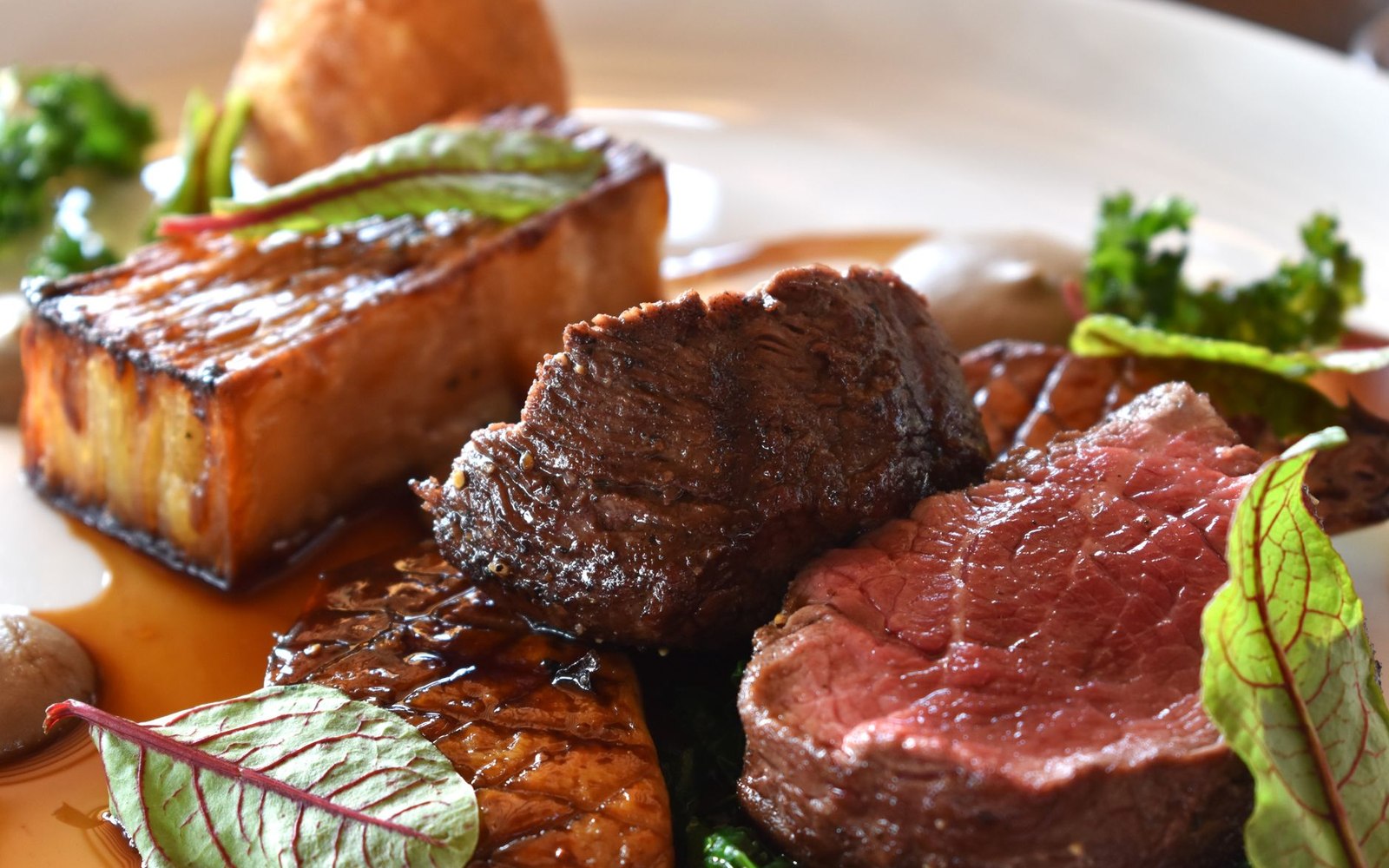
Here is the point that matters most for the cook: this conversion is irreversible and time-dependent at low temperatures. You cannot rush it by raising the heat. If you turn up the oven and drive the braising liquid to a rolling boil, muscle fibres contract sharply, expelling moisture, and the meat tightens and dries before the collagen has fully converted. You have spent two hours making leather. Low heat — in practice, a gentle trembling at the surface of the liquid, not a simmer, not a boil — keeps muscle proteins from seizing while giving collagen the sustained warmth it needs to slowly come undone. This is why time and temperature are not interchangeable in braising, where they are effectively interchangeable in other techniques.
Why stock is never boiled rests on exactly the same physics, applied to bones rather than muscle: violence at the surface breaks what patience would preserve.
The Liquid Level and What It Changes
French technique has always been precise about the liquid level in a braise, and the reason is not fussiness. Where the liquid sits relative to the meat determines what the braise actually is.
A true braise — what the French would call braiser in the strictest sense — covers the meat between a third and halfway up its depth. The lower half cooks in liquid; the upper half cooks in steam. This is not a compromise between two methods; it is the method. The liquid half extracts flavour into the braising medium and contributes gelatin to it; the steam half concentrates the surface of the meat and develops a different textural character to the submerged portion. The cooking liquid becomes a sauce by reduction after the braise, not during it — you lift the meat, reduce the liquid, skim the fat, and mount it back to the correct consistency.
Cover the meat entirely and you are poaching it under a lid — a perfectly valid approach, but a different one, producing a lighter, more neutral result, with less of the layered intensity a true braise develops. Barely moisten the bottom of the pot and you are, in effect, braising in steam with very little liquid exchange, which suits particular cuts (small birds, for instance) but leaves little braising liquid to work with.
| Level | What you get |
|---|---|
| A third to half up the meat | The true braise — lower half in liquid, upper half in steam; layered flavour and a sauce-ready liquid |
| Fully covered | A poach under a lid — valid, lighter, more neutral, less intensity |
| Barely moistened | A near-steam braise — suits small birds; leaves little working liquid |
The aromatic base also behaves differently depending on liquid level. In a partial braise, the mirepoix and herbs are in contact with both the liquid and the steam. Their flavour compounds leach into the liquid from below; the dry-heat environment above drives volatile aromatics upward into the steam. Both then circulate through the closed system. It is, in miniature, the same logic as building a fond brun: layering method and time to extract different flavour compounds in sequence.
The Arc of a Braise
A braise has a shape. Understanding its arc is what lets you intervene at the right moments and ignore the pot at all others.
In the first third, the liquid heats to its working temperature, moisture releases from the meat's surface, the aromatics begin to exhaust their volatile compounds into the closed environment. Nothing looks dramatic from outside. In the middle period — often the longest — the slow conversion of collagen is underway. The liquid gradually deepens in colour, viscosity, and taste. The meat is still firm enough to hold its shape if you were to lift it, but beginning to yield. This is where patience is both the technique and the test of it. In the final phase, collagen conversion nears completion, the meat is offering almost no resistance to a probe, and the braising liquid has thickened perceptibly. This is when the cook's attention returns: it is possible to over-braise, driving past the point of silky tenderness into a stringy, falling-apart texture where structural integrity is lost entirely. For some preparations — pulled or shredded meat — that may be the goal. For a braised cheek served whole, it is not.
The method is slow because the chemistry is slow.
The transition between these phases is not marked by a timer. It is marked by touch and by what the meat does when probed. A cook who checks the oven temperature and the time is doing something useful; a cook who also tests the meat periodically knows when the braise is done. The recipe can give you a range. Only the pot tells you where in that range you are.
Resting the finished meat in its liquid as both cool is not optional sentimentality. As the temperature drops, the meat reabsorbs some of what it has given up, and the gelatin in the liquid begins to set. The result — sliced cold, the braising liquid a trembling, deeply flavoured jelly — is itself a finished preparation, served that way across large parts of northern and eastern France. The long braise of Alsatian tradition, the baeckeoffe, where multiple meats cook sealed in a flour-paste-lidded terrine, is a long braise served hot.
What braising teaches, ultimately, is that the French obsession with controlled environment is not timidity. Sealing the pot, moderating the heat, tending the liquid level, building the aromatic base — each decision shapes the specific conditions that allow collagen, steam, and time to do work no amount of skill at the stove could replicate in twenty minutes. The method is slow because the chemistry is slow. Once you understand that, braising is not patience. It is precision at a different clock speed.
Continue in the house