Sauces · Maison II
Velouté: The Most Ignored Mother
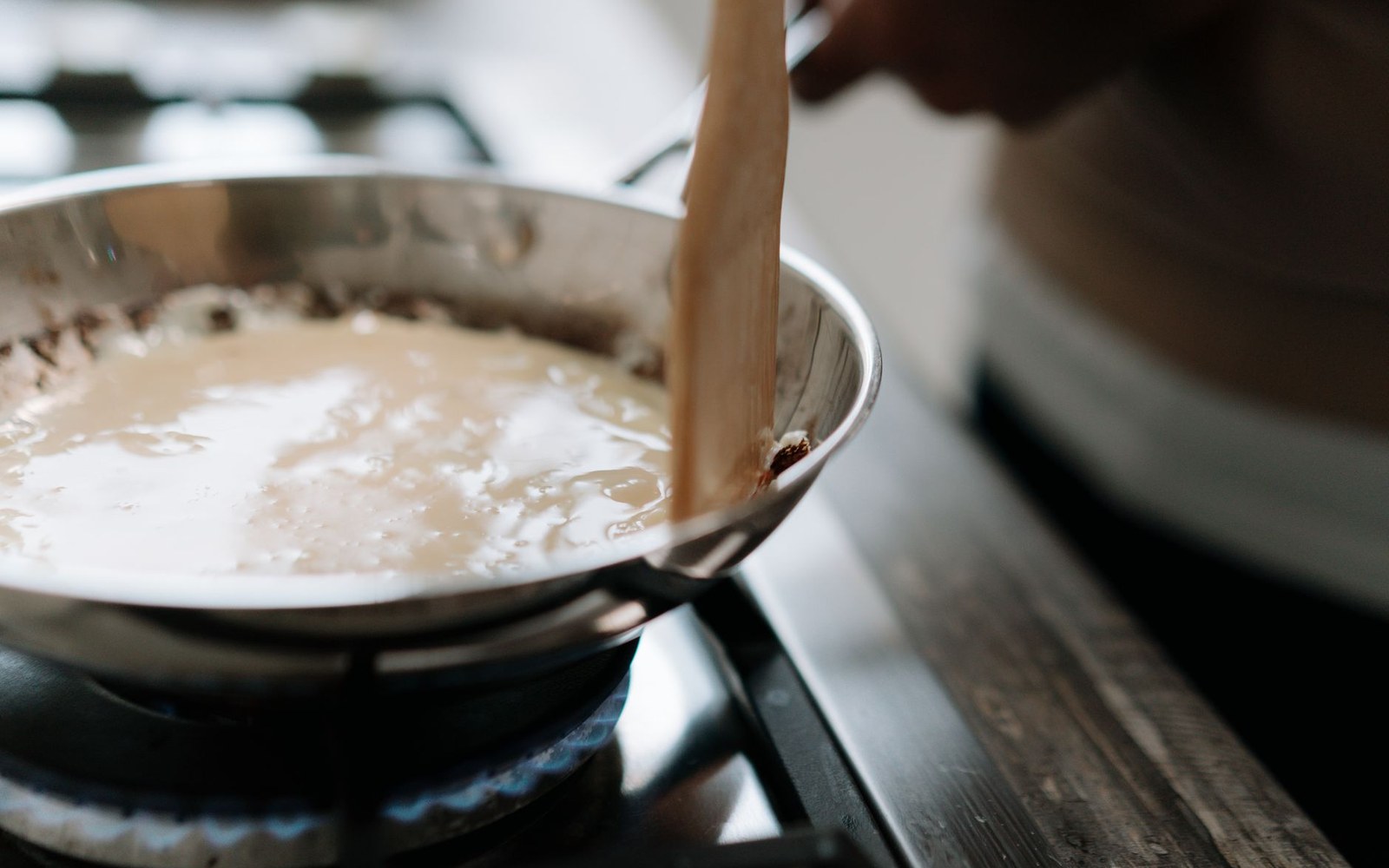
Of the five classical mothers, velouté is the one most cooks have heard of and fewest actually understand.
What It Is and Why It Matters
Velouté is simple to state: a white stock — veal, chicken, or fish — thickened with a blonde roux. That description makes it sound like the lesser cousin of béchamel, which is the same construction but built on milk. The difference is everything. Where béchamel is closed — a cream-white backdrop with nowhere structurally to go — velouté inherits the full flavour architecture of its underlying stock. Every daughter sauce you derive from it carries that foundation forward.
The roux here is blonde rather than white: cooked a shade longer than the raw paste used in béchamel, long enough to lose the floury taste without acquiring the nuttier colour of a brown roux. The fat — traditionally butter — and the flour are cooked together until the mixture smells faintly of shortbread, then the warm stock goes in gradually, the whole thing simmering until it coats a spoon with body but no heaviness. Velvet, the name insists, and it should be.
The roux for a velouté is blonde — cooked to a faint shortbread smell: past the floury stage of a white roux, well short of the colour of a brown one.
The stock determines the sauce's entire identity. A fond blanc de volaille gives you poulet velouté; fish stock gives you velouté de poisson; fond blanc de veau was the classical prestige version, the one Escoffier placed at the centre of the grande cuisine battery. Each version is categorically different in flavour, even though the method is identical.
The Daughter Sauces
From chicken velouté, the classical kitchen derives two of its most useful sauces. Sauce suprême adds cream and, classically, a little butter mounted at the finish — monter au beurre — producing something richer and rounder. Sauce allemande (or parisienne) takes the chicken velouté, reduces it with egg yolks and cream in liaison, and arrives at a sauce with real body and a slight richness that falls short of heaviness. Both sauces assume a well-made velouté underneath them; the daughter cannot exceed the quality of the mother.
From fish velouté the derivations include sauce vin blanc — the stock enriched with a white-wine reduction and finished with butter — and sauce Bercy, which adds shallots and parsley. These are the sauces that actually appear on a plate beside turbot or sole, and the cook who understands velouté can improvise them rather than reaching for a recipe.
| Base stock | Velouté | Daughters |
|---|---|---|
| Fond blanc de veau | Veau velouté | The classical prestige base — central to the system |
| Fond blanc de volaille | Poulet velouté | Sauce suprême (cream, a butter finish); sauce allemande (egg-yolk and cream liaison) |
| Fond de poisson | Velouté de poisson | Sauce vin blanc (white-wine reduction, butter); sauce Bercy (shallots, parsley) |
The reason velouté gets ignored is that it demands a good stock before it demands anything else. It does not hide behind milk or cream. It is transparent about what went into it, which is both the difficulty and the point: master the stock, and the sauce follows. Neglect the stock, and no amount of technique at the roux stage will rescue you.
Continue in the house