The Kitchen Itself · Maison V
Copper: Why the Old Pans Still Win
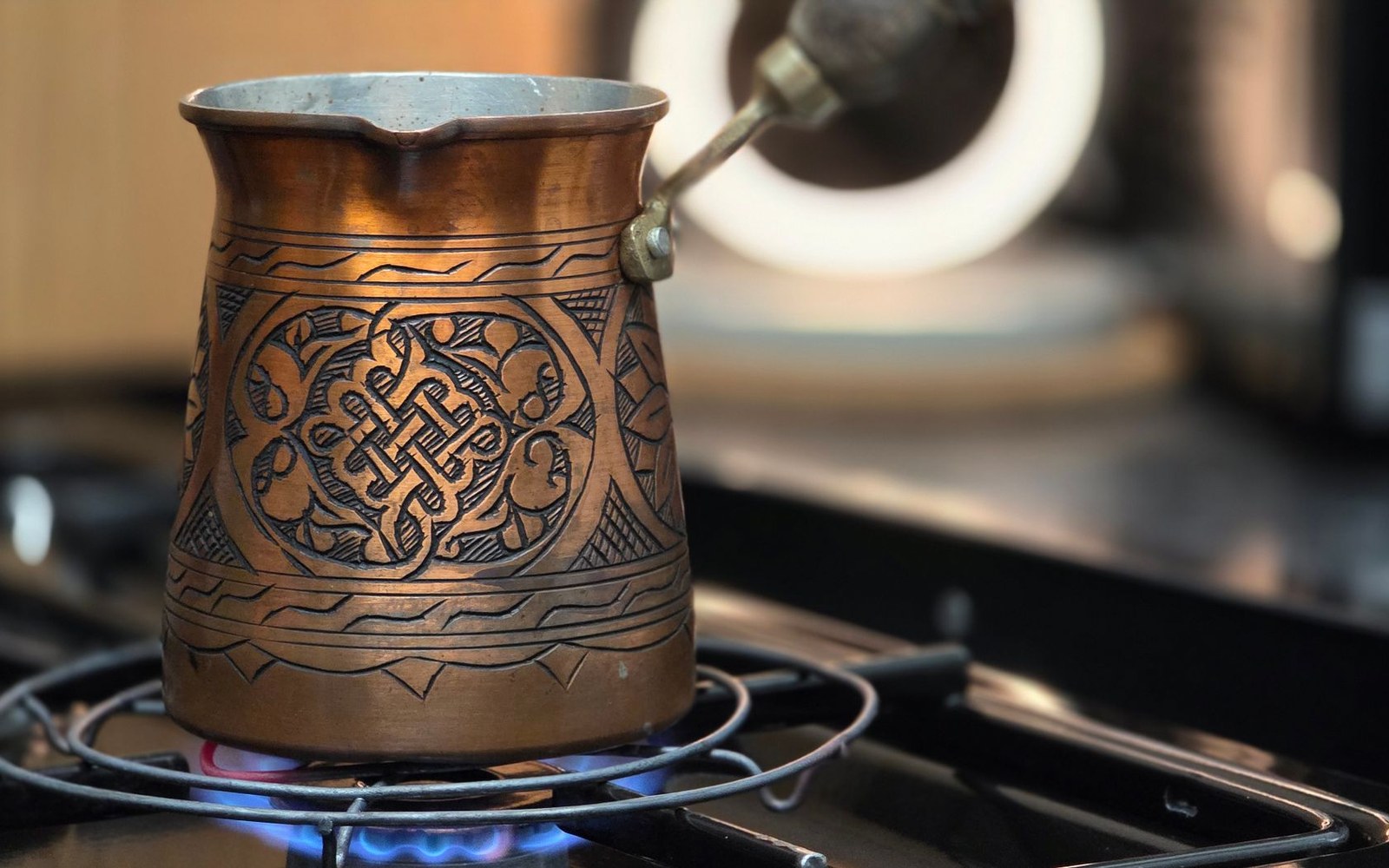
The case for copper isn't sentiment — it's heat physics, and it matters most exactly where French cooking is most demanding.
The Physics That Makes the Difference
Copper conducts heat faster and more evenly than any other common pan material. Stainless steel conducts at roughly a twentieth of copper's rate; cast iron sits somewhere in between but holds heat rather than distributes it. What this means in practice is that when you lower the flame under a copper saucepan, the pan responds almost instantly. A stainless pan continues radiating stored heat into your sauce for several seconds after you've adjusted — long enough to break a beurre blanc or scramble the liaison in a velouté.
This responsiveness is the real argument for copper, and it is an argument made entirely by physics. The pan's thermal conductivity doesn't just heat food quickly; it equalises temperature across the entire cooking surface. There are no hot spots at the base's centre where burner flames concentrate. For sauce work — reductions, emulsions, egg-thickened liquids — uniform, controllable heat is not a luxury. It is the condition that makes the technique possible.
Why Sauce Work Specifically
French classical sauce-making sits at the edge of what heat can do without ruining things. A beurre blanc must stay warm enough to melt butter but cool enough to keep it emulsified. A sauce allemande — the egg-yolk liaison that finishes a velouté — must reach the temperature that thickens the yolk without reaching the temperature that curdles it. The margin between these is narrow, and copper lives inside it. Other materials make you chase the heat; copper lets you place it.
| Copper | The fastest, most even conductor of the common pan metals; responds almost instantly |
| Aluminium | A strong conductor; the professional substitute inside clad pans |
| Cast iron | Low conductivity, high retention — the opposite temperament |
| Stainless steel | A poor conductor on its own; usually wrapped around a copper or aluminium core |
| Étamé | Tin-lined copper — the traditional lining; soft, and re-tinned as it wears |
Professional kitchens in France lined their batterie de cuisine with étamé copper — tin-lined, because copper reacts with acids and salts when uncoated — precisely because of this control. The tin lining is soft and will eventually wear through, requiring re-tinning, which is why modern copper pans are more often lined with stainless steel. The thermal performance is marginally affected; the maintenance burden drops considerably.
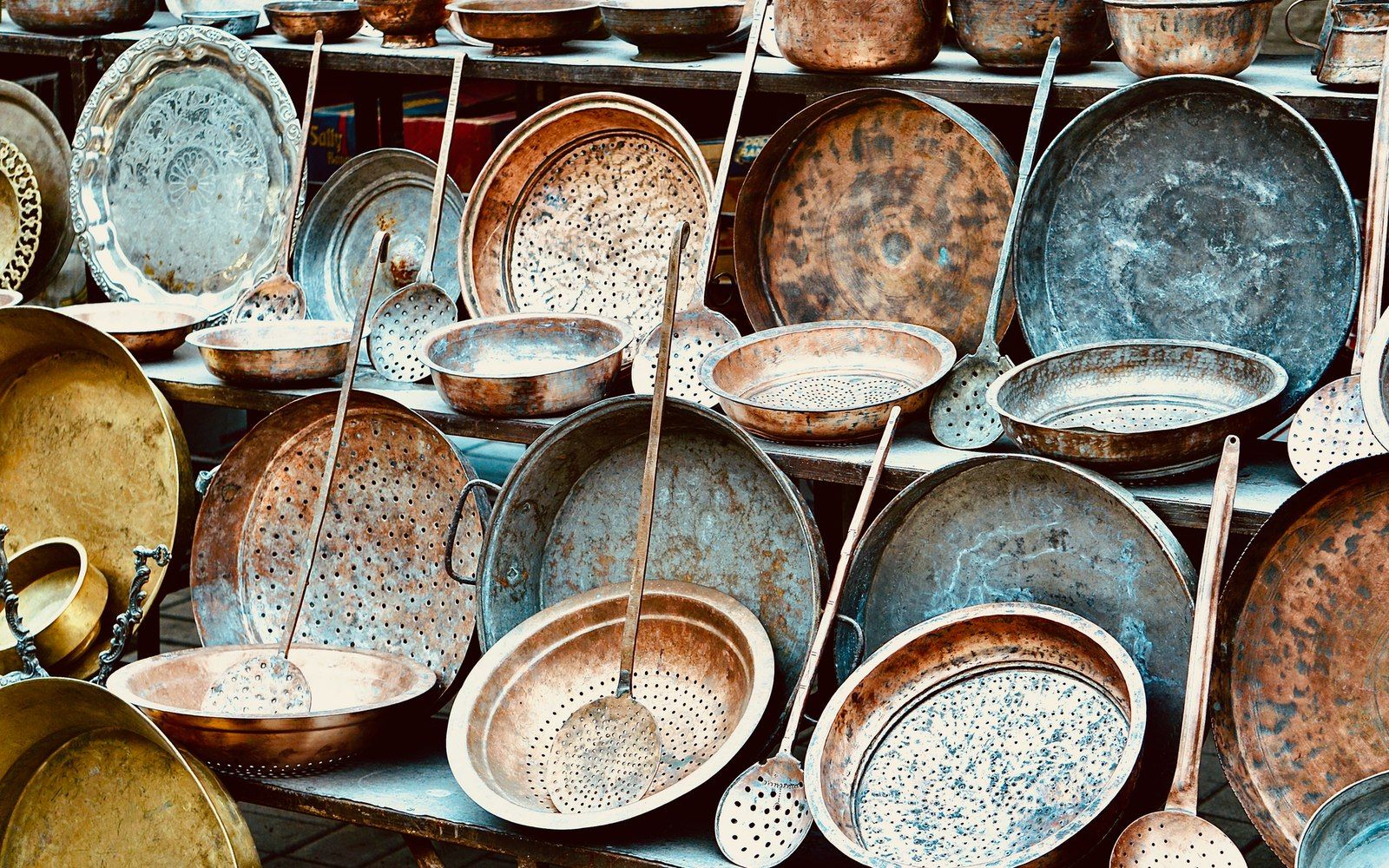
The weight and cost of copper are real objections. A well-made copper saucier of useful size is expensive and heavy. But the cook who understands why copper works — instant response, even distribution, tight thermal control — understands what they are actually buying: not a beautiful object, but a manageable temperature gradient at the moment it matters most.
Continue in the house