Regions at the Table · Maison IV
Where the Butter Stops and the Oil Begins
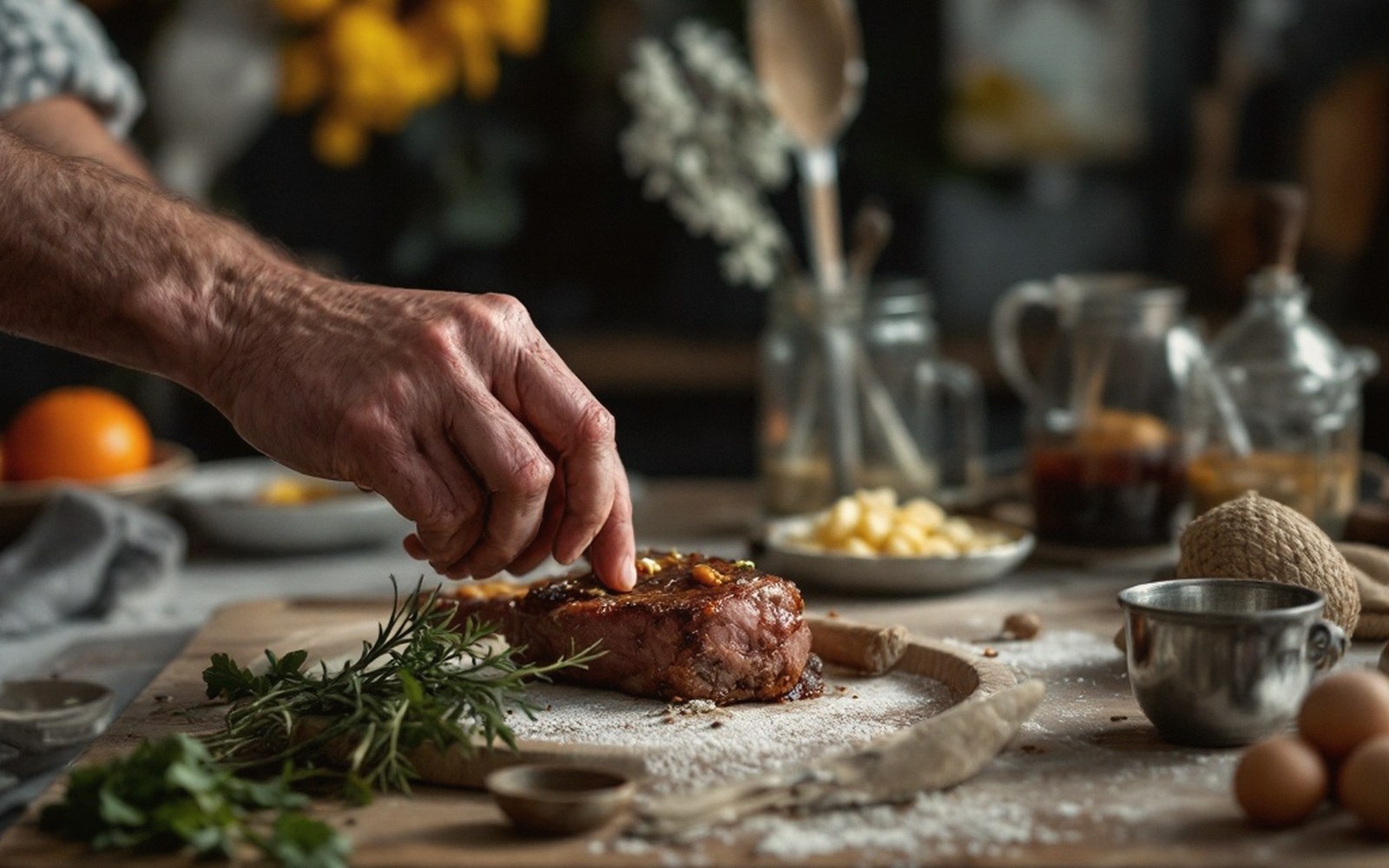
The fat in a kitchen tells you where you are. In the south of France, it has always been olive oil.
The Line on the Map
France has a fat frontier, and it runs roughly where the olive tree stops growing reliably — somewhere in the middle of the country, in the Rhône valley, south of Lyon. Below it, in Provence and Languedoc, the cooking grammar changes entirely. Not better or worse than the butter-and-cream north: different in logic, because the available materials were different.
The difference begins with the olive. Olive oil does not behave like butter. It carries no water and no milk solids, so it cannot foam or brown in the way that gives a beurre noisette its character. What it offers instead is stability at moderate-to-high heat, a fat that coats and conducts without burning, and a flavour of its own that becomes part of every dish it touches. In the north, fat is largely neutral, a carrier. In the south, fat is an ingredient.
Garlic, Tomato, and the Refusal of Cream
Provençal cooking is built on a trio that would be jarring in Normandy: olive oil, garlic, and tomato. The tomato is a late arrival historically — it came from the Americas and was slow to be trusted as food — but once it was adopted in the south, it suited the fat perfectly. Tomatoes are acidic and water-rich; butter would break and separate in their presence over a long cook, but olive oil holds. The combination produces the foundation of dishes like daube provençale, where the fat is oil, the liquid is wine, and the aromatic is garlic rather than the cream or the cider you would find further north.
Garlic in this cooking is not a seasoning in the background. Aïoli — the great Provençal condiment of garlic and olive oil — is emulsified by hand, oil beaten slowly into crushed raw garlic until the whole mass becomes dense and stable. No egg yolk in the traditional version: the garlic itself, with its fine cellular tissue, does some of the emulsification work. The result is less forgiving than a mayonnaise but far more characterful.
| Butter | Olive oil | |
|---|---|---|
| Contains | Water and milk solids | Neither |
| Under heat | Foams, browns, can burn | Stable at moderate-high heat |
| Flavour | Mild, dairy-sweet — mostly a carrier | An ingredient in its own right |
| With acid, over time | Emulsions break | Holds |
Languedoc, to the west, shares the olive-oil grammar but inflects it differently: more dried herbs, the influence of Spain across a porous border, pulses used where a northern cook might reach for a cream sauce. Cassoulet, the great Languedoc dish, is technically a braise — but one built on duck or goose fat rather than butter, cooked long and open so the crust forms and breaks back into the pot repeatedly. The fat is rendered from the confit duck legs that go into it; the dish carries its own cooking medium inside it.
| Aïoli | Garlic-and-olive-oil emulsion, traditionally made without egg yolk |
| Daube provençale | Long braise in wine and oil, aromatic with garlic |
| Cassoulet | Languedoc slow bake of pulses and meats; its fat comes from the confit inside it |
| Bouillabaisse | Marseille fish soup — oil as structural emulsifier, not garnish |
| The southern base | Tomato, garlic and fennel, where the north reaches for onion, carrot and celery |
The Bouillabaisse Principle
Bouillabaisse is Marseille's most examined dish, and what matters here is not its precise ingredient list — that argument has no end — but its structural principle. It is a fish soup in which olive oil is not a finishing touch but a structural emulsifier. The saffron-scented broth is whisked with oil as it cooks, kept at a vigorous simmer so the oil and the fish liquid stay integrated rather than separating. The result is rich and cohesive in a way that no butter-based fish soup achieves, because oil and hot fish stock, agitated, will hold together where butter would split and pool.
The south did not make this choice. The olive tree made it. What French cooking gains from the olive-oil tradition is not a correction of the north but a second, fully developed logic — aromatic, direct, built for heat and acidity — running alongside the first.
Continue in the house